


Hangman - Classical Word Game
4.720.00 Reviews
App Specs
- Version
- 2.1.1
- Updated On
- License
- Free
- Downloads
- 100,000+
- Developer
- GeniusTools Labs
- Categories
- Word
- Platform
- Android
Screenshots
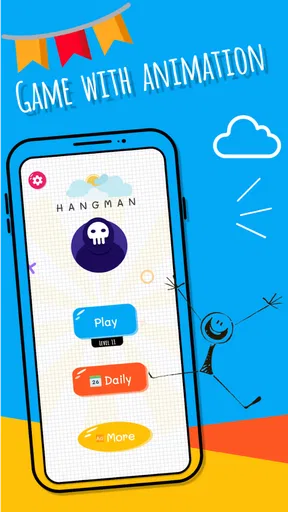
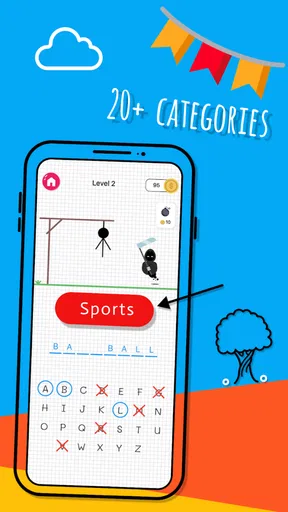
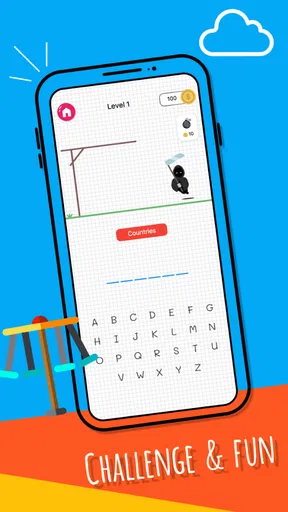
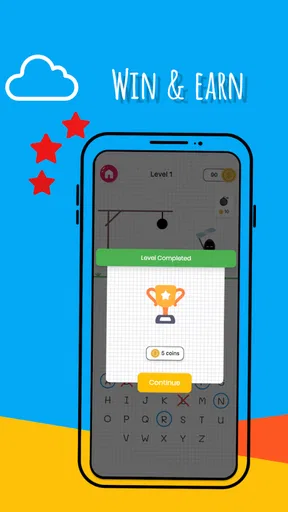
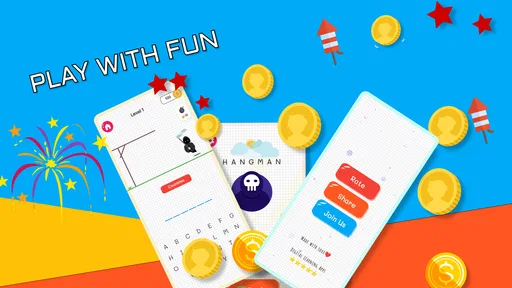
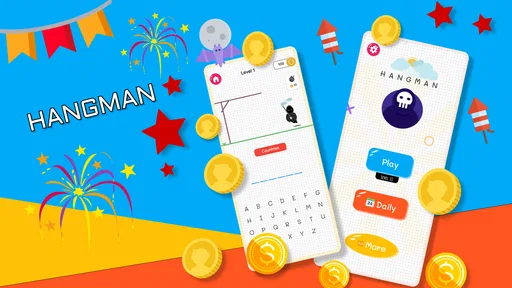
 Analysis by AppCompare
I found Hangman - Classical Word Game easy to understand within seconds, which is exactly what I want from a casual word game. The basic task is familiar: work out a hidden word by choosing letters, while each incorrect guess brings the hangman closer to being completed. That simple tension makes a round feel meaningful without asking me to learn a complicated ruleset first.
This is a free game from GeniusTools Labs, listed for Everyone and available on Android devices running version 6.0 or later. It sits in the word-game category rather than trying to be a broad puzzle collection. That focus is useful for someone who wants a quick guessing challenge, a quiet way to pass a few minutes, or a game that can be handed to a child without a long explanation.
After spending time with it, I would describe the experience as traditional rather than experimental. The appeal comes from recognizing patterns, managing risk, and deciding whether to use a likely vowel or test a less obvious consonant. The first meaningful success arrives quickly: identify a few letters, narrow the possibilities, and complete a word before the drawing is finished.
Getting comfortable with the classic format
I like how the classic format gives a new player an immediate foothold: the blanks and gallows make the goal clear before the guessing begins. In this section, I’ll focus on what that simplicity feels like in practice and why it suits a quick, low-pressure session. Once the basic rhythm feels familiar, the next step is getting from installation to a first completed word.
What the first launch feels like
The opening experience is refreshingly direct. I do not need to study a tutorial to understand the objective. The familiar gallows format explains the central rule visually, and the letter-guessing approach is recognizable even if I have not played hangman recently. For a first-time user, that removes the most common barrier: wondering what action the game expects.
The game’s store summary describes it as a classic gallows hangman experience, and that is a fair description of its identity. It does not need an elaborate premise to work. I am presented with a word to solve, a collection of letters to consider, and the pressure of limited mistakes. The simplicity is the point, especially when I want something lighter than a strategy game or a long-form word puzzle.
One useful way to approach the first round is to treat it as a pattern exercise instead of a vocabulary test. Look at the number of spaces, notice any revealed letters, and think of common word endings before making random guesses. This makes the game feel less like tapping through possibilities and more like solving a small problem.
Worth Reading Before You Choose

Flipboard Shows What News Apps Must Do Beyond the Feed

Switching to Android Auto Means Rethinking Your Driving Routine

Google Calendar Makes a Crowded Week Easier to Manage

Ludo King Makes the Most of the Minutes Between Plans

Baby Panda World Brings Quick Play to Modern Phones, but Its Game Library Feels Busy

ESPN’s Live Game View Makes Following Close Games Easier
Who will enjoy the pace
I think it suits people who like familiar rules and short sessions. It can work during a commute, while waiting for an appointment, or as a brief break between more demanding tasks. Because the central interaction is so compact, I do not feel locked into a large commitment every time I open it.
It is also a reasonable choice for families looking for an accessible word activity. The Everyone content rating makes the intended audience broad, and the basic concept is easy to explain aloud: guess letters, build the word, and avoid too many wrong choices. Younger players may benefit from starting with obvious vowels and common consonants rather than trying to solve each word immediately.
On the other hand, I would not choose it for someone seeking a deep vocabulary trainer, a competitive multiplayer experience, or a large campaign with evolving mechanics. The classic format has a clear ceiling. Once the rules are familiar, the satisfaction depends mainly on the words presented and on how carefully I guess, not on unlocking a complex system.
What the strong reception suggests
The game has a 4.7 average from around 1.6 thousand ratings, and it has passed 100 thousand installs. Those figures suggest that the straightforward approach has found an audience. I would not treat popularity as proof that every player will love it, but it does match my impression that the game is easy to pick up and comfortable for casual use.
It was released on November 13, 2022, and the current version is 2.1.1. The developer is GeniusTools Labs. Those details matter mainly because a first-time user may want to know whether this is an established, actively presented game rather than an unnamed word puzzle with no clear identity.
From installation to your first completed word
I find the first round is easiest when I treat it as a small process rather than a race: inspect the spaces, make an informative guess, then use the changed pattern to choose again. This section follows that path from opening the game to finishing a word, including a simple way to avoid spending guesses without learning much. After that, it helps to understand a few common sources of confusion.
What to do before guessing
Once the game is installed, I recommend resisting the urge to tap letters immediately. First, count the visible spaces and scan for any letters already shown. Even one revealed character can change the likely answers dramatically. A short word with a repeated pattern should be approached differently from a longer word with no clues.
My usual opening method is to test a common vowel when the board gives me little information. Vowels often reveal the shape of a word, but I avoid spending every early turn on them. If one appears, I then look for common consonants that could create familiar beginnings, endings, or repeated combinations.
That balance is more important than it sounds. A random sequence of guesses can use up the available margin before the word becomes recognizable. A cautious sequence can reveal enough structure to make the remaining choices much safer. The game rewards disciplined guessing more than fast tapping.
How I reach the first success
For a new player, a practical first-round routine is simple. Begin with one common vowel, inspect the pattern again, and then choose a consonant that fits several possible words. If the board starts to resemble a familiar ending, use that information rather than continuing with unrelated letters. When a letter appears more than once, remember that a single successful choice may provide several clues at once.
Suppose the pattern suggests a common word ending but leaves the beginning open. I would focus on letters that naturally appear before that ending instead of testing the alphabet in order. This is where the game becomes more satisfying: the board gradually changes from a collection of blanks into a limited set of plausible answers.
When I think I know the word, I still check every blank before making the final guess. A near-match can be misleading, particularly when several words share the same ending. The visual progress of the gallows encourages urgency, but taking one extra moment to verify the pattern is often better than relying on an assumption.
Turning mistakes into useful clues
An incorrect guess is not completely wasted. It removes a letter from consideration and helps define the word’s shape indirectly. I find it useful to remember wrong letters mentally and avoid returning to the same idea in a different form. The best players are not those who never make a mistake; they are the ones who learn from each mistake quickly.
A good habit is to divide the alphabet into possibilities and exclusions. If several common consonants have already failed, I can give more attention to less obvious options. This prevents the familiar letters from becoming a trap. The game remains simple, but that small change in thinking makes later rounds more deliberate.
Small points that can confuse new players
A familiar word can still be hard to identify when several possibilities fit the same blanks, so I try not to confuse an early hunch with a proven answer. Here I’ll cover the small judgment calls that can trip up new players, from guessing habits to purchase awareness on a shared device. With those points clear, it becomes easier to decide whether this is the right kind of word game for you.
Why a familiar word can still be difficult
Knowing the vocabulary is only part of the challenge. A common word can be hard when its most informative letters are missing from the early pattern. Repeated letters can also create false confidence: I may recognize a possible word too soon and overlook another answer that fits the same spaces.
When that happens, I try to separate recognition from proof. I ask whether every visible blank is accounted for and whether the letters already tested support the guess. This approach is especially helpful for children, who may identify a word quickly but forget that the game still requires each position to be completed.
Why guessing in alphabetical order is inefficient
Alphabetical guessing feels organized, but it is rarely the best strategy here. It spends valuable turns on letters that may tell me very little about the word. A frequency-based approach is more practical: start with letters likely to reveal the word’s structure, then adapt when the pattern changes.
There is a trade-off, though. Always choosing the most common letters can make a round predictable and may leave unusual words difficult to finish. I get better results when I begin with common choices but switch earlier once the board shows that the answer does not follow an ordinary pattern.
What free actually means here
The game is free to download and play, but it includes in-app purchases ranging from $0.49 to $99.99 per item. That is worth noticing before handing the device to a child or allowing purchases on a shared account. I would check the device’s purchase protections in advance, particularly because a simple game can be opened casually and used without much supervision.
The presence of optional purchases does not change the basic appeal of the word challenge for me, but it does affect how I recommend setting it up. If I am installing it for a family member, I make sure the account and device controls match the way that person uses mobile games. That small precaution avoids an unpleasant surprise later.
Where the experience may feel limited
The classic design is both the strength and the limitation. Players who enjoy a clear, repeatable loop will appreciate the lack of clutter. Players who need constant novelty may find repeated guessing rounds less engaging over time. Compared with a daily word game, this format is less about maintaining a particular routine; compared with a crossword, it offers fewer layers of clue interpretation.
It also does not replace a serious language-learning tool. Solving a word can reinforce spelling awareness, but the game’s main purpose is guessing under pressure. Someone who wants definitions, pronunciation practice, progress tracking, or structured vocabulary lessons would be better served by a dedicated educational app.
How it compares with other word-game choices
I see this game as a focused alternative to formats built around clues, grids, or a daily routine: its appeal is the quick tension of choosing letters with limited mistakes. This section compares those different moods and explains when I would pick hangman over a crossword or another word puzzle. From there, I’ll turn to practical habits that make each round more thoughtful.
Against daily word puzzles
A daily word puzzle usually gives me a more defined ritual: one central challenge, a reason to return at a particular time, and often a stronger sense of personal record. This hangman game feels more flexible. I can play when I want rather than waiting for a daily reset, and the classic drawing adds a visual consequence that many letter-grid games do not have.
The trade-off is that a daily puzzle may feel more memorable because everyone is working from the same challenge. Here, the enjoyment is more private and immediate. I would pick this game for spontaneous short sessions, while choosing a daily format when I want a regular habit or something to discuss with friends.
Against crosswords and word searches
Crosswords ask me to interpret clues, connect answers, and manage a larger grid. Word searches focus more on visual scanning. This game is narrower but faster. Its central skill is estimating which letters will reveal the most useful information before the drawing reaches its final stage.
That makes it a good entry point for someone who finds crosswords intimidating. It also makes it less satisfying for an experienced puzzle fan who wants layered clues or a broad board to explore. I would not call one format better; they serve different moods. Hangman is the choice when I want a compact decision-making puzzle rather than a long solving session.
Against more elaborate hangman apps
Some alternatives build the same idea around themes, characters, rewards, or additional modes. Those additions can provide longer-term motivation, but they can also distract from the word itself. This game’s classic identity is appealing when I want the rules to remain visible and uncomplicated.
The downside is that a player who expects a large progression system may find the experience modest. Before installing, I would ask myself whether I want a clean guessing activity or a game with layers of collection and customization. For the former, this is a sensible fit; for the latter, a more feature-heavy alternative may be worth considering.
Practical ways to get more from each round
Once I’m comfortable with the rules, I get more out of a round by looking at the whole letter pattern instead of reacting only to the latest reveal. This section offers a few ways to adapt guesses to the word’s shape and make the game work as a light shared activity. Those habits also make it easier to judge whether the simple format will stay enjoyable over time.
Use the board as a pattern, not a scoreboard
My most effective improvement came from looking at the entire arrangement of blanks rather than focusing on the latest revealed letter. Word length, repeated positions, and possible endings work together. If I only react to individual letters, I miss the larger shape and make guesses that feel reasonable but do not narrow the answer enough.
I also try to distinguish between a productive guess and a merely plausible one. A productive guess is likely to reveal several positions or eliminate a meaningful group of words. A merely plausible guess is based on one idea that may be wrong. Choosing the first type keeps the round moving even when I do not know the answer.
Adjust your strategy for short and long words
Short words often create ambiguity because many answers share similar patterns. In those rounds, I avoid committing too early to a single possibility. Longer words can provide more structure, especially when they contain repeated letters or recognizable endings, but they may also tempt me to guess a complex answer before enough evidence is available.
For a short pattern, I focus on eliminating alternatives. For a longer pattern, I focus on identifying word families and common combinations. This is a small strategic distinction, but it makes the game feel less repetitive because my approach changes with the board instead of following one fixed sequence.
Make it a shared activity
Although I primarily treat it as a solo game, the rules work well for informal turn-taking. One person can suggest a letter while another watches the pattern develop, or a parent can ask a child to explain why a particular guess is useful. That turns a few quiet minutes into a spelling and reasoning exercise without making it feel like a lesson.
I would keep the help limited. Giving away the answer removes the central satisfaction, while asking questions such as “What letters have already been ruled out?” encourages the player to use the board. This is one of the better ways to introduce the game to someone who feels nervous about word puzzles.
Who should install it, and who should skip it
I recommend it to first-time word-game players, fans of traditional hangman, families wanting an accessible guessing activity, and anyone who prefers short sessions over elaborate progression. The Everyone rating and low entry barrier make it approachable, while the free price makes trying it straightforward.
I would be more cautious about recommending it to players who need extensive explanations, advanced language instruction, competitive online play, or a large variety of puzzle formats. It is not trying to be all of those things. Its value comes from doing one recognizable activity without making the first step difficult.
The current version is 2.1.1, and the game supports Android 6.0 and later. Before installing on an older device, I would check that the operating system meets that requirement. If the game is intended for a child, I would also review purchase controls because individual in-app items can cost from $0.49 to $99.99.
My recommendation after playing
I came away seeing this as a dependable casual word game rather than a deep puzzle platform. The first round is reassuringly clear, and the path to a successful word is easy to understand: inspect the pattern, choose informative letters, learn from misses, and verify the completed answer. That makes it especially welcoming for someone who has never used a hangman app before.
Its limitations are equally clear. The classic loop may not hold the attention of players who need constant new systems, and it should not be confused with a full vocabulary course or a crossword replacement. The purchase range also means I would set sensible device controls before letting a child play independently.
For me, the best reason to keep it installed is convenience. When I want a quick mental reset, I can open a round without learning a new rule set or preparing for a long session. If you want a focused, familiar word challenge with an immediate first success, Hangman - Classical Word Game is worth trying; if you want extensive modes or serious language study, choose a more specialized alternative instead.
Pros
- Simple rules make it easy for anyone to start playing.
- Short rounds are ideal for quick breaks or casual play.
- Helps improve spelling and expand everyday vocabulary.
- Classic gameplay works well for both children and adults.
- Offline play makes it useful when no internet connection is available.
Cons
- Repeated words may make long sessions feel predictable.
- Some puzzles can be frustrating when only rare letters remain.
- Ads may interrupt gameplay in the free version.
- Limited variety may not satisfy players seeking deeper challenges.
- Small screens can make letter buttons uncomfortable for some users.
FAQs for Hangman - Classical Word Game
What is Hangman - Classical Word Game?
Hangman - Classical Word Game is a traditional word-guessing puzzle adapted for mobile devices. You try to discover a hidden word by selecting letters one at a time. Correct guesses reveal the word, while incorrect guesses gradually complete the hangman drawing. It is a simple game, but the limited number of mistakes makes each round challenging and engaging.
How do you play Hangman - Classical Word Game?
To play, examine the blank spaces representing the hidden word and choose letters that you think may be included. Every correct selection fills in the matching positions, while an incorrect letter uses one of your available attempts. The round ends when you uncover the complete word or make too many wrong guesses. Paying attention to word length and common letter patterns is essential.
Is Hangman - Classical Word Game suitable for children?
The game is generally suitable for children, teenagers, and adults because its core mechanics are easy to understand and encourage spelling, vocabulary development, and logical thinking. However, the available word categories and advertising experience may vary depending on the version installed. Parents should review the app’s age rating, permissions, and any in-app purchase options before allowing younger children to play.
Can Hangman - Classical Word Game be played offline?
Many basic Hangman games can be played without an internet connection once installed, which makes them convenient for travel, school breaks, or areas with limited connectivity. Nevertheless, some features may rely on internet access, including advertisements, online leaderboards, analytics, updates, or additional word packs. Check the store description and test the game in airplane mode to confirm offline availability.
Does Hangman - Classical Word Game contain ads or in-app purchases?
The presence of advertisements and optional purchases depends on the specific publisher and version available for Android or iOS. Free editions commonly display ads between rounds or on menu screens, while some may offer paid options to remove them or unlock extra categories. Before downloading, review the store listing for pricing, subscriptions, permissions, and purchase details to avoid unexpected charges.


